
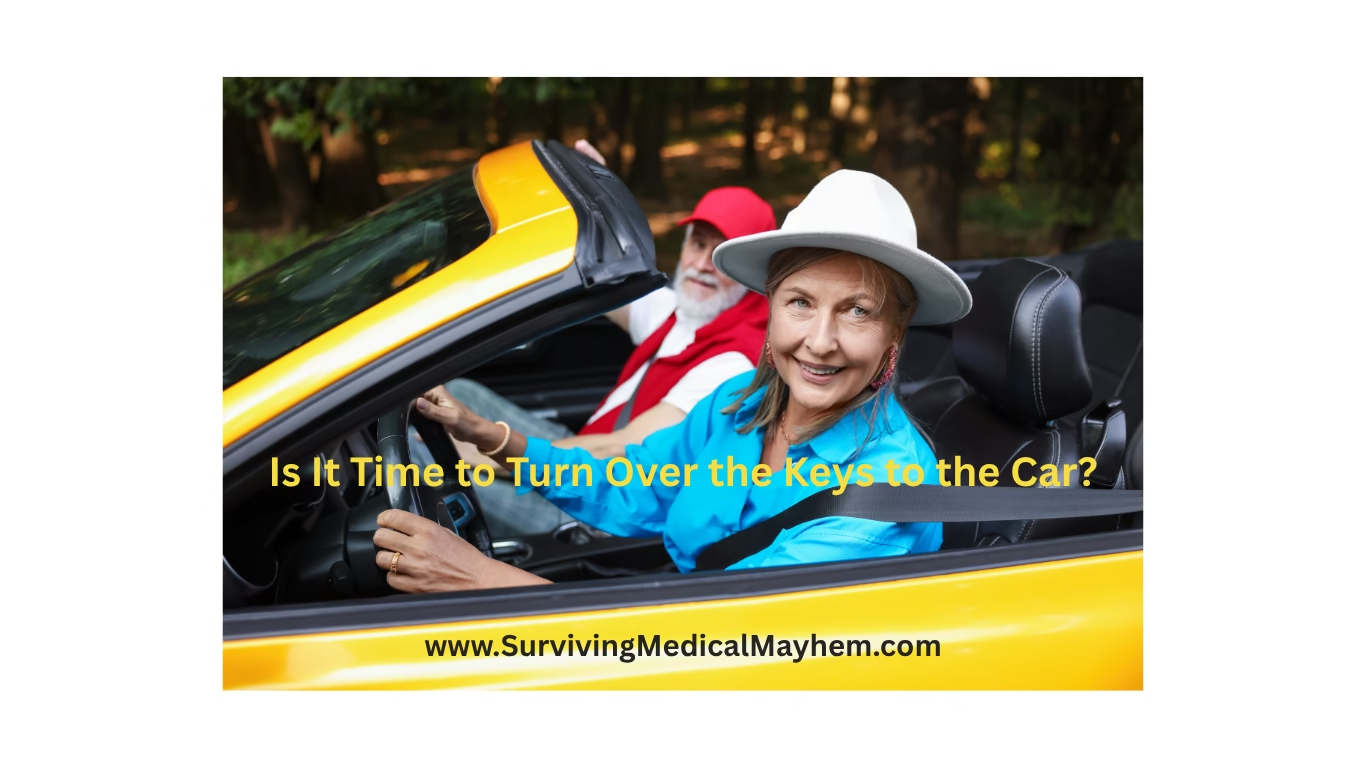
Is it Time to Turn Over the Keys to the Car?
I can remember the exhilaration of getting that first driver’s license. It was a passage to freedom and felt like proof that I was an adult. Music blaring, windows down, hair blowing through my hair, cruising along Ocean Blvd in South Florida I felt like I was soaring (speeding probably – I had a lead foot in those days).
Fast forward sixty plus years and I find myself in a different stage in my driving life. First of all, I am much more aware of the possibility of accidents. The headlines alone bring us cause for caution. According to the Harford Insurance Corporation, statistics of older drivers show that fatalities increase slightly after age 65 and after age 75, there is a higher risk of being involved in a collision for every mile driven. This is nearly equal to the risk of younger drivers ages 16-24. Yikes! Today, I drive the speed limit and keep my eyes on the road regardless of what is taking place in the car or on the sides of the road. I also don’t take chances like I did in my youth – when I thought nothing could hurt me.
But in the last two years, we have faced and discussed this question a lot:
Is aging and illness making driving difficult?
My husband has always been a good, safe driver. We would go on trips and I would inevitably fall asleep, assured that he could get us safely where we had to be. But in the last few years I have felt less sure. You see, three years ago he began to develop neuropathy in his feet making it difficult at times to feel the brake and accelerator pedals and move between the two. Two years ago, a fall on his shoulder and subsequent massive infection led him to have a replacement of a damaged reverse shoulder replacement. Because of the severity of the infection, they were only able to give him a partial shoulder replacement. This has left him with limited use of his right arm. He can bend at the elbow but cannot raise the arm up and forward to shake someone’s hand without using his left arm to assist. Since then he has developed essential tremors in his hands which can be very frustrating with the use of all the touch screens and electronics in our cars.
However, it’s amazing what Thad manages to do despite these limitations. Because of his years in the lab he is ambidextrous and for the most part has been able to care for himself with a little help with adaptive clothing. And the man has more patience than I could ever muster. But I digress.
The looming question remained – Could he or should he return to driving?
We have spent this last two years talking with doctors, friends and most importantly talking with those who see him, help him and know him best – his family. This road for driving cessation is an unpaved gravel road. Realizing that one can no longer drive can lead to isolation, loss of personal or spousal independence and self-sufficiency. And because it is such a right of passage, it is all the more painful when one realizes that this time in their life is ending.
Whether the decision is made to limit the amount of driving or a sudden complete cessation, as Thad’s was, it is something that needs to be made by the older driver, their physician and family together.
If the older driver feels able to drive but in a limited capacity; here are some suggestions from the Centers for Disease Control and Prevention:
- Exercise regularly to increase strength and flexibility.
- Limit driving only to daytime, low traffic, short radius, clear weather.
- Plan the safest route before driving and find well lit streets, intersection with left turn arrows, and easy parking.
- Ask the doctor or pharmacist to review medicines – both prescriptions and over the counter to reduce side effects and interactions.
- Have eyes checked by an eye doctor at least once a year. Wear glasses and corrective lenses as required.
- Preplan and consider alternative sources and costs for transportation and volunteer to be a passenger.
How to determine whether an older driver is having problems driving? The best way is to be a passenger in the car. Here are some questions from Today’s Caregiver Newsletter that can help.
- When exiting a highway or interstate, does the driver seem confused?
- Does the driver seem nervous, confused or agitated when driving?
- Does he/she fail to stop at red lights or stop signs?
- Is there confusion over the gas or the brake pedal?
- Are there unexplained dents in the paint of the car, mailbox, garage, or other objects/vehicles at the home?
- Can he/she read and understand traffic signs?
- Does the driver stop for no apparent reason?
- How do other drivers react to the older driver on the road?
- Are turns, especially left ones, difficult to navigate?
- Is he/she aware of potentially dangerous situations or activity on the side of the roadway?
Answers to these questions can help the caregiver, and family members evaluate how well the older driver is navigating.
While it may be difficult to take away an older person’s driving privilege away ask yourself this question: “Would you feel safe riding along with your older person driving or having your child or grandchild ride along with them?” If the answer is “no” then the issue needs to be addressed openly and in a spirit of love and support. This may need to be done over several conversations and in gradual steps of cessation but one that is necessary in keeping our roads and loved ones safe.
While Thad’s mental capacity was still intact, his reaction times, and physical limitations make it difficult for him to drive safely and in the end he made the decision to give up driving permanently. I, for one, am very proud of him. This is not an easy decision and it has certainly changed our lives. But rather than dwell on his limitations we have discussed what he is still very much able to do. There is a lot that owning a home needs doing and so we made a list of those things from the mundane – collecting the garbage and setting it out to making sure the water softener has salt and the HVac air filter is changed monthly. Slowly, we are adapting to a “new normal”. We make a point not to isolate ourselves by spending time with family, friends, neighbors, and church and exploring new hobbies to replace those we can longer do. Instead of mourning what we have lost, we choose to find joy in what we can still do. And that’s a lot.
If you would like further information on this subject please check out:
https://caregiver.com/articles/driving-aging-difficult/
https://caregiver.com/articles/driving-checklist/
https://caregiver.com/articles/conversation-thanksgiving-driving/
Thank you for reading my post. If you have found it encouraging please consider liking, commenting or sharing it. Feel free to even re-blog – may these words take flight!

I have additional insights I’d love to share with you found in the pages of my debut book: Surviving Medical Mayhem – Laughing When It Hurts. To order a copy or learn more go to my website at www.lorettaschoen.com
Blessings for Health & Wellness.